
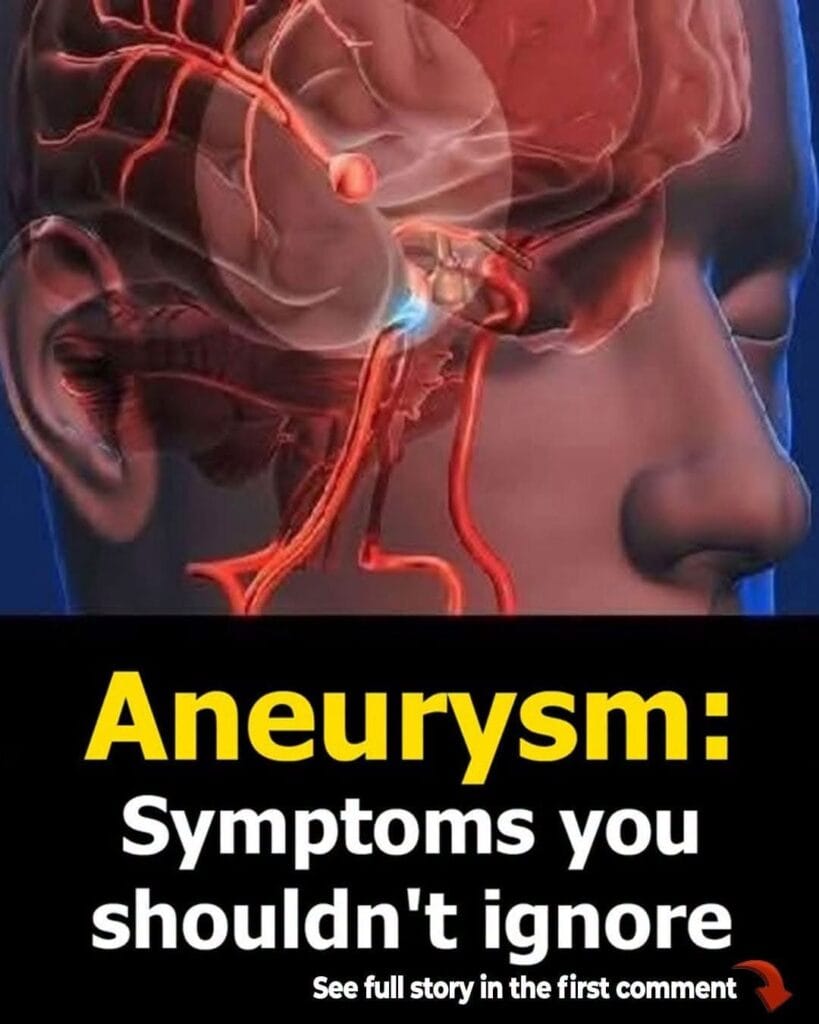
That headline is unsettling, but taking the time to learn the warning signs is a powerful way to protect yourself and your loved ones. An aneurysm is a bulge in a blood vessel that can be life-threatening if it ruptures. Because an unruptured aneurysm often has no symptoms, it can be a silent threat . However, sometimes there are early warning signs, and being aware of them is crucial.
🧠 What Is an Aneurysm?
An aneurysm is a balloon-like bulge in the wall of a blood vessel. It can happen in any artery, but the most common and concerning locations are in the brain and the aorta (the main artery that runs from the heart through the chest and abdomen). The danger is that the weakened vessel wall can stretch and potentially rupture, causing internal bleeding that can be fatal.
🚨 12 Early Warning Signs of an Aneurysm
Many aneurysms are small and cause no symptoms until they rupture. However, a growing or leaking aneurysm can produce warning signs. It’s important to remember that these symptoms can also be caused by many other conditions, but they warrant prompt medical attention.
Common Signs of a Brain Aneurysm (Before Rupture):
- Sudden, severe headache: Often described as the “worst headache of your life,” this is a classic sign of a ruptured brain aneurysm.
- Pain above or behind the eye: A localized pain in this area can be a warning sign.
- Blurred or double vision: Pressure from an aneurysm can affect the nerves that control vision.
- A drooping eyelid: This can also be a sign of nerve pressure.
- Numbness or weakness on one side of the face: This is another sign of nerve involvement.
- Seizure: A seizure can be the first sign of a brain aneurysm in some cases.
Signs of a Possible Aortic Aneurysm:
- Deep, constant pain in the chest or abdomen: This pain can be a sign of a thoracic (chest) or abdominal aortic aneurysm.
- Pain in the back or side: This can also be a symptom.
- Pulsing feeling near the navel: This is a common sign of an abdominal aortic aneurysm.
- Shortness of breath or difficulty breathing: A thoracic aortic aneurysm can press on the windpipe.
- Hoarseness: Pressure on the vocal cord nerves can cause this.
- Dizziness or lightheadedness: This can be a sign of a leaking aneurysm.
👩🏻⚕️ When to Seek Immediate Help
If you experience any of these symptoms, especially a sudden, severe headache, do not wait. Call for emergency medical help immediately. Early detection and treatment can save lives, but a ruptured aneurysm is a critical emergency that requires immediate care.
✨ My Personal Note
I keep a small notebook and pen by my bed to jot down any unusual symptoms I notice. It helps me track patterns and gives my doctor a clear picture if I need to make an appointment. It’s just one small way I stay on top of my health.