
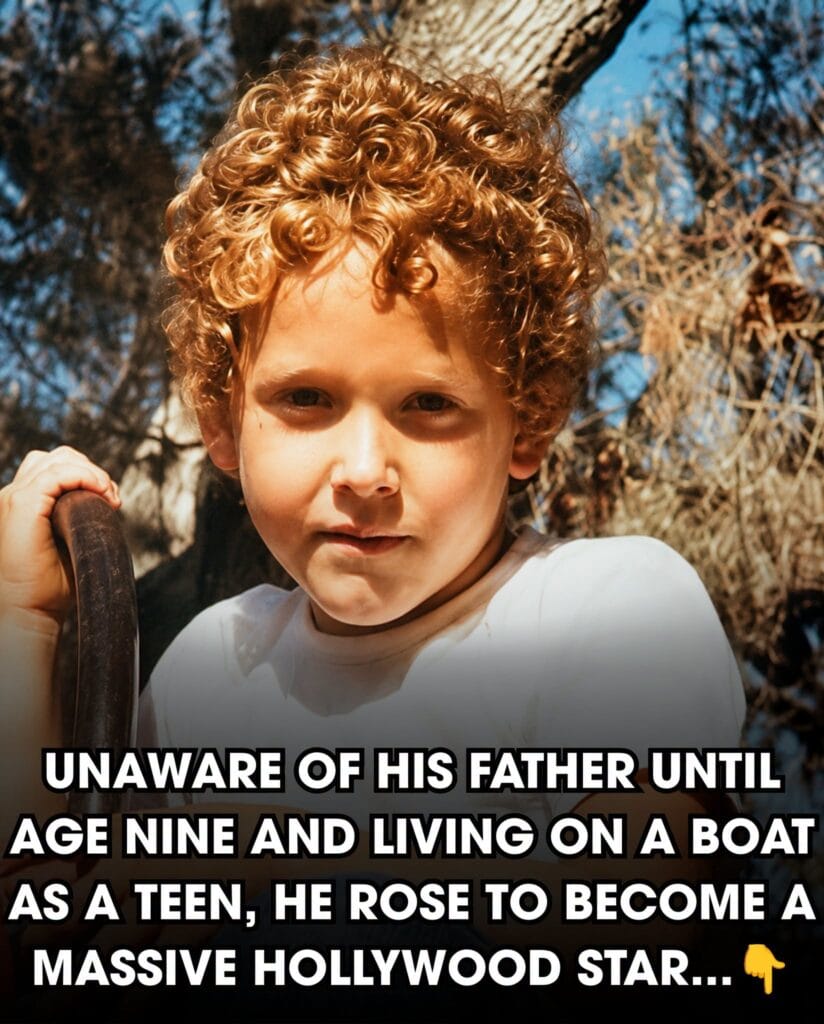
On screen, he is known for his steady stare, quiet authority, and rugged presence — the kind of performance that helped make one of television’s biggest modern Western dramas unforgettable. To many fans, he is the tough ranch foreman who can command a scene without saying much at all.

Off screen, however, his road to fame was far less polished.
Long before Hollywood fully embraced him, Cole Hauser grew up moving from place to place, shaped by a childhood marked by change, uncertainty, and independence. His life was not built around comfort or easy privilege. Instead, it was shaped by adaptation, resilience, and learning how to stand on his own.
Hauser was born on March 22, 1975, in Santa Barbara, California, and some of his earliest memories were tied to ranch life. He grew up around horses, open land, dirt roads, and the kind of outdoor freedom that would later make his most famous television role feel strangely familiar.
By the time he was four years old, his mother moved him to a 1,500-acre ranch near Eugene, Oregon. Hauser later described that period as one of the happiest parts of his youth. Surrounded by animals, wide-open land, and rural independence, he developed a connection to ranch life that stayed with him for decades.
That stability did not last in one place. His mother’s restless lifestyle eventually took them across the country to Clearwater, Florida, a move Hauser later described as one of the hardest transitions of his childhood. After that, they returned to California, where his teenage years brought an unexpected turn.
At around twelve, Hauser joined an acting class, not because he saw himself as a future star, but because it seemed like something casual and interesting to do. What began almost by accident soon became something much more serious. Acting caught his attention, and before long, it became the path he wanted to follow.
When he told his mother he wanted to pursue acting, she revealed a surprising family connection: her side of the family was tied to Warner Bros. His mother, Cass Warner, came from one of Hollywood’s most historic families. His maternal great-grandfather was Harry Warner, one of the founders of Warner Bros.
But that famous name did not hand him a career.
Instead of giving him shortcuts, his mother made him work for every opportunity. Auditions meant long bus rides into Los Angeles, brief casting sessions, and long rides back home. The process was exhausting, but it also tested how serious he really was.
During that period, another major truth came to light. Hauser learned that his biological father was also in the entertainment industry: actor Wings Hauser.
He had not grown up knowing him. In fact, Hauser later said he discovered who his father was when he was about nine or ten years old, after seeing the name Wings Hauser in the credits of a movie on television. When he asked his mother about it, she explained the truth.
The father-son relationship was complicated. Hauser eventually reconnected with Wings during his teenage years and moved closer to Los Angeles while trying to build an acting career. But the reunion did not create an easy or stable home life.
At one point, Hauser ended up living on an old PT boat docked in Marina del Rey while continuing to chase auditions. For most teenagers, that would have been overwhelming. For Hauser, it represented freedom — a difficult but defining chapter that forced him to become independent early.
His persistence eventually began to pay off. Hauser landed early film roles and started appearing alongside actors who would later become some of Hollywood’s biggest names.
One of his earliest major credits came in School Ties in 1992, followed by Dazed and Confused in 1993. Those early roles placed him among a generation of young actors who would soon become central figures in American film.

Source: Wikimedia Commons

From there, Hauser continued building a career through intensity, discipline, and authenticity. He appeared in films such as Good Will Hunting, Higher Learning, Pitch Black, Tigerland, 2 Fast 2 Furious, and many others.

Source: Wikimedia Commons

Still, for many viewers, the role that truly defined him came years later when he was cast as Rip Wheeler in Yellowstone.
As Rip, Hauser brought together much of what had shaped his real life: toughness, silence, loyalty, and a deep familiarity with ranch culture. His childhood around horses and open land helped him bring authenticity to the role, while his years of struggle gave the character emotional weight.
The performance struck a powerful chord with audiences. Rip Wheeler became one of the most recognizable characters in modern television, turning Hauser into a standout figure in the revival of Western drama.

Source: Wikimedia Commons
.jpg)
Today, Cole Hauser is closely associated with the role that made him a household name for a new generation. But his story is not only about fame. It is about a boy who moved through uncertainty, discovered family truths late, lived independently as a teenager, and kept chasing work even when the odds were against him.
From ranches in California and Oregon to a docked boat in Marina del Rey, and finally to one of television’s most successful Western dramas, Hauser’s path proves that a difficult beginning does not have to decide the ending.
His rise was shaped by persistence, family complexity, hard lessons, and a refusal to quit — the same qualities that continue to define his presence both on screen and off.