
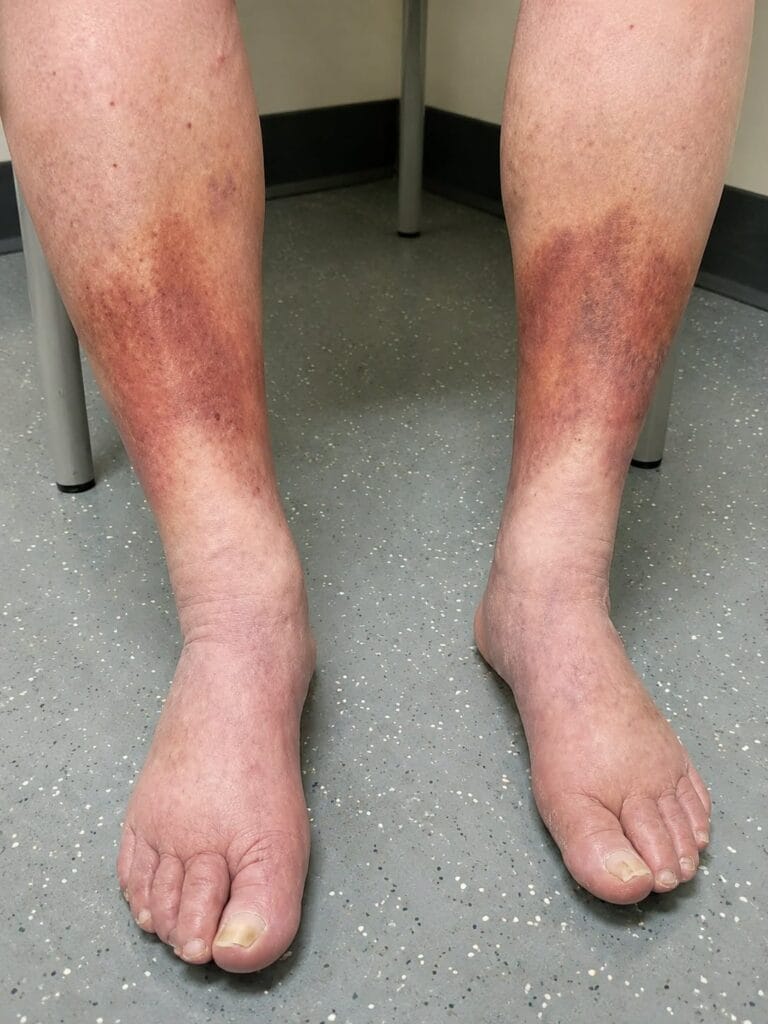
Subtitle: To answer your question directly: Yes, swollen legs and darkened skin can absolutely be signs of poor circulation. In fact, they are two of the most classic, well-documented signs of a specific circulatory issue called Chronic Venous Insufficiency (CVI).
Let me tell you about the first time I noticed swelling in my legs.
I was in my late fifties, and I’d been standing for a long time. I noticed that my legs were swollen, and the skin on my ankles looked darker. I was worried.
I did some research, and I learned about Chronic Venous Insufficiency.
What Is Chronic Venous Insufficiency (CVI)?
A circulatory condition. It’s a condition where the veins have trouble returning blood to the heart.
Valve problems. The valves in the veins become weak or damaged.
Blood pools. Blood pools in the legs.
Swelling. Swelling occurs.
Skin changes. The skin can change color.
A common condition. It’s a common condition, especially in older adults.
The Symptoms of CVI
Swollen legs. Swelling in the legs and ankles.
Darkened skin. The skin on the legs and ankles may become darker.
Heavy legs. A feeling of heaviness in the legs.
Aching. Aching or pain in the legs.
Varicose veins. Enlarged, twisted veins.
Itching. The skin may itch.
Cramps. Leg cramps.
Restless legs. A restless feeling in the legs.
The Science Behind CVI
One-way valves. Veins have one-way valves that prevent blood from flowing backward.
Weak valves. When these valves become weak, blood can pool in the legs.
Increased pressure. This pooling causes increased pressure in the veins.
Fluid leakage. The increased pressure can cause fluid to leak into the surrounding tissue, causing swelling.
Skin changes. The pooled blood can cause the skin to darken.
The Risk Factors
Age. CVI is more common as we age.
Genetics. A family history of CVI increases your risk.
Obesity. Excess weight puts pressure on the veins.
Pregnancy. Pregnancy can weaken the veins.
Prolonged standing or sitting. This can increase pressure on the veins.
A sedentary lifestyle. Lack of exercise can contribute.
The “Red Flags” to Watch For
Sudden swelling. Sudden swelling in one leg.
Pain. Pain in the leg.
Redness or warmth. Redness or warmth in the leg.
Skin changes. Skin changes, such as a rash or ulcer.
Difficulty walking. Difficulty walking.
Chest pain. Chest pain or shortness of breath.
If you have any of these symptoms, see a doctor immediately.
Gentle, Proactive Steps You Can Take at Home
Elevate your legs. Prop them up on a pillow or ottoman.
Exercise regularly. Walking helps improve circulation.
Wear compression stockings. They can help improve circulation.
Maintain a healthy weight. Excess weight puts pressure on the veins.
Avoid prolonged standing or sitting. Take breaks to move around.
Stay hydrated. Drink plenty of water.
Eat a healthy diet. A balanced diet can support vascular health.
When to See a Doctor
If you have symptoms of CVI. See a doctor for a proper diagnosis.
If you have swelling in one leg. This can be a sign of a blood clot.
If you have skin changes. Skin changes can be a sign of a serious condition.
If you have pain. Pain can be a sign of a serious condition.
If you are concerned. It’s always better to be safe than sorry.
Frequently Asked Questions
What is Chronic Venous Insufficiency?
A condition where the veins have trouble returning blood to the heart.
What are the symptoms of CVI?
Swollen legs, darkened skin, and aching.
What causes CVI?
Weak or damaged valves in the veins.
How is CVI diagnosed?
With a vascular ultrasound.
How is CVI treated?
With lifestyle changes, compression stockings, and sometimes medical procedures.
Can CVI be prevented?
Lifestyle changes can help prevent CVI.
A Final Thought
When I learned about CVI, I felt relieved. I knew what I was dealing with, and I knew what I could do about it. It’s a manageable condition.
Have you ever experienced swollen legs or darkened skin? Share your experience in the comments. 🩺🦵