
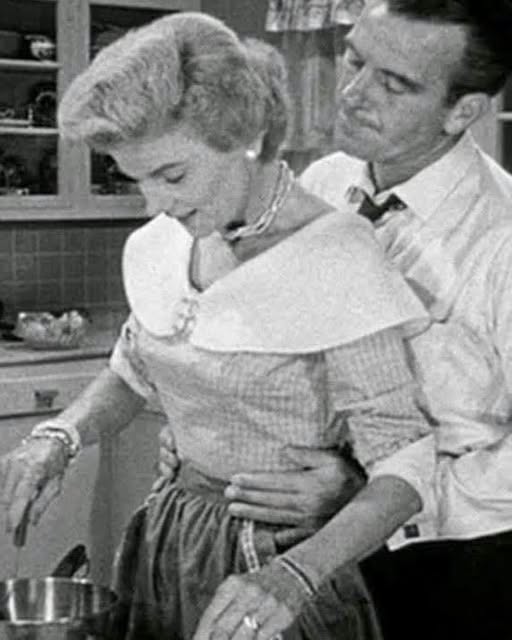
If the world felt a little more like Leave It to Beaver, many fans would probably say it would be a warmer, kinder place. The classic sitcom, which aired from 1957 to 1963, became one of American television’s most recognizable portraits of family life, built around the Cleaver household and the everyday lessons learned by Ward, June, Wally, and Theodore “Beaver” Cleaver. (Wikimedia Commons)

Still, even a show remembered for neat living rooms, polished manners, and gentle moral lessons had its share of production mistakes, strange details, and funny behind-the-scenes stories. Some were tiny continuity errors, while others became part of television history.
A Show That Set a Higher Standard
Although Leave It to Beaver followed a fictional family, it helped shape an idealized version of American family values on television. The series was clean, carefully written, and often quietly funny rather than loud or exaggerated. Its humor came from childhood misunderstandings, parental patience, sibling loyalty, and the small problems of ordinary suburban life.

Source: Wikimedia Commons

That polished image is exactly why its bloopers are so enjoyable. The Cleaver home looked almost impossibly organized, but sharp-eyed viewers have still spotted little things that slipped through.
June Cleaver’s Calendar Mistake
One of the best-known goofs involves June Cleaver’s kitchen calendar. Since June was presented as the picture of careful housekeeping, it made sense that the family home would have a calendar on the wall. But in the 1963 episode “The Poor Loser,” the dates on the calendar did not line up correctly. The production appears to have used an older calendar, reportedly from 1961, instead of one matching the episode’s year. (Newsner English)
In that same episode, Ward and Beaver prepare to attend a baseball game. During a close-up of the tickets, another small mistake appears: “Mayfield” is spelled correctly in the large print, but the smaller print reportedly misspells it as “Mayfied.” It is a tiny error, but once fans notice it, it becomes hard to unsee. (Newsner English)

Source: Wikimedia Commons

The Fake Bee on a String
Another amusing mistake comes from the episode “The Silent Treatment.” In one scene, Beaver is painting a door when a bee begins buzzing around him. Special effects were far simpler in that era, so instead of using a real bee, the crew used a fake one attached to a string. If you look closely, the string can reportedly be seen moving near Beaver’s face. (Newsner English)
That little detail is charming because it shows how television was made before digital effects. A small prop, a bit of string, and a camera angle were sometimes enough to create a moment that viewers accepted at the time.
Jerry Mathers Was More Careful Than Beaver
Jerry Mathers, who played Theodore “Beaver” Cleaver, became one of the most beloved child actors of his generation. In real life, however, Mathers has said he got into much less trouble than his character did. The set was busy, closely supervised, and filled with crew members who helped create a family-like atmosphere around the young actors.

Source: Wikimedia Commons

Mathers has remembered the production as a friendly environment where the children were surrounded by adults from lighting, camera, wardrobe, and other departments. Between scenes, he and the crew sometimes played games, making the studio feel less like a workplace and more like an extended family.
Jerry Mathers’ Famous Cub Scout Audition
Mathers’ audition for Beaver has become part of classic television lore. He arrived wearing his Cub Scout uniform because he had a Cub Scout meeting afterward and was more concerned about making it there than impressing television producers. That honesty helped him stand out. (Me-TV Network)
The show’s creators, Joe Connelly and Bob Mosher, saw something natural in him: innocence, directness, and a believable way of delivering lines. His simple concern about missing his meeting made him seem exactly like the kind of boy who could bring Beaver Cleaver to life.
Once Mathers got the role, his schedule changed dramatically. Like other child actors, he had to balance school with filming. His school hours were broken into pieces around camera setups, long shots, close-ups, and scene changes.
A Smart Deal for a Child Actor
Mathers has often been described as one of the early child actors to benefit from a deal connected to television merchandise. That was unusually forward-thinking for the period, especially because Leave It to Beaver continued earning attention long after its original run ended.
The larger point is clear: the show did not disappear when it left prime-time television. Its reruns, reunions, and nostalgic appeal kept the Cleaver family in public memory for decades.
Tony Dow Was Not the First Wally
Tony Dow became unforgettable as Wally Cleaver, Beaver’s athletic, patient, and good-hearted older brother. His version of Wally felt natural: a teenager who was responsible but not perfect, protective but sometimes embarrassed by his younger brother’s antics.

Source: Wikimedia Commons

But Dow was not the original actor chosen for Wally. In the early pilot, Paul Sullivan played the role. He was later replaced after growing too tall and appearing too mature for the character, opening the door for Tony Dow to take the part. (IMDb)

Source: Wikimedia Commons

June Cleaver’s Pearls and High Heels
Barbara Billingsley’s June Cleaver became famous for looking perfectly dressed even while doing housework. The image of June vacuuming in pearls and high heels became one of the most recognizable symbols of 1950s television motherhood.
But her wardrobe choices had practical reasons. The pearls helped hide a mark or hollow area on her neck that she preferred not to emphasize on camera. The high heels also helped maintain her height beside her growing television sons. (Remind)

Program: “Leave It to Beaver”
On Air: Thursdays, 9-9:30 PM, EDT.
“Beaver” Trio
Barbara Billingsley, who stars as Mrs. Cleaver, poses with television sons Tony Dow (Wally) left, and Jerry Mathers (Beaver) on the set of ABC-TV’s “Leave It to Beaver” Thursdays, 9-9:30 PM, EDT.
Source: Wikimedia Commons

Did Jerry Mathers and Tony Dow Get Along?
The brotherly chemistry between Jerry Mathers and Tony Dow was not just acting. The two developed a genuine friendship while making the series, and that bond helped make Beaver and Wally’s relationship feel believable.
Mathers later described Wally as the ideal older brother — athletic, smart, admired, and usually able to do the right thing. That dynamic worked because Dow brought warmth and patience to the role, while Mathers brought curiosity and mischief.
Their friendship lasted long after the show ended. When Dow died in 2022, Mathers publicly mourned him and described him not only as his television brother, but as someone who had been like a real brother in many ways. (EW.com)
Jerry Mathers Was Not Killed in Vietnam
One of the strangest rumors connected to Leave It to Beaver claimed that Jerry Mathers had died in Vietnam. The story was false. Mathers never served in Vietnam, although he did serve in the Air National Guard in the United States. (Military.com)
The rumor appears to have spread because of confusion involving someone with a similar name, and it became one of the most persistent celebrity death myths of the era. Mathers later explained that he discovered the false report through newspaper coverage. (Military.com)
The Most Expensive Episode
One of the most memorable episodes of Leave It to Beaver is “In the Soup,” which aired in 1961. In the episode, Beaver climbs onto a giant soup-cup billboard to prove there is no soup inside, only to fall into the oversized cup and get stuck.
The episode was unusually expensive for the series. Mathers later recalled that it cost far more than a typical episode, with two billboards built for the production — one outside and one on a soundstage. (Me-TV Network)
For fans, the scene became unforgettable. For Mathers, it was also memorable because he did much of the climbing himself, despite the challenge and the fear involved.
The Toilet That Made TV History
Leave It to Beaver also holds a surprising place in television history because of a bathroom scene. In the episode “Captain Jack,” Wally and Beaver try to hide a baby alligator in the toilet tank because the animal needs water.
At the time, showing a bathroom on television was considered risky by network standards. The episode was delayed over censorship concerns, and the compromise allowed only the back of the toilet tank to be shown. (People.com)
That may sound harmless today, but in the 1950s it was a major boundary for television. The moment helped set a precedent for what could be shown in a family sitcom. (People.com)
The First Episode Almost Did Not Air as Planned
Because of the alligator-and-bathroom storyline, what was intended as an early episode faced resistance from network censors. Jerry Mathers later explained that television rules at the time were so strict that even showing a bathroom could be considered unacceptable. (People.com)
The producers fought for the scene because the story depended on it. In the end, they were allowed to show the toilet tank but not the full toilet. That small compromise became one of the show’s most famous pieces of trivia.
The “No Big Laughs” Policy
The creators of Leave It to Beaver did not aim for loud, explosive comedy. They preferred smiles and gentle chuckles. Tony Dow later said that if a line received too big a laugh, the producers would often remove it because they wanted the humor to stay natural and grounded. (IMDb)
That decision helped define the show’s tone. Instead of slapstick chaos, Leave It to Beaver relied on character-based humor, childhood logic, and small family misunderstandings. That is one reason the series still feels warm rather than harsh.
Why the Bloopers Still Matter
The mistakes in Leave It to Beaver do not weaken the show’s legacy. In many ways, they make it more human. A wrong calendar, a misspelled ticket, a fake bee on a string, and a carefully negotiated bathroom shot all remind viewers that even the most polished television classics were made by real people solving problems under pressure.

Source: Wikimedia Commons

More than sixty years later, Leave It to Beaver remains beloved because it captured something simple and enduring: the humor of growing up, the comfort of family, and the belief that small mistakes could become meaningful lessons. So the next time you watch an episode, look closely. Behind the perfect living room and polished manners, you may spot one of those tiny bloopers that makes the show even more memorable.