
The “Charming” Trap
Hook: We’ve all stayed in that one place—the Airbnb with the “vintage character,” the friend’s guest room in a 1920s brownstone, or that slightly dusty apartment that feels like a cozy time capsule. We call it “charming.” We call it “rustic.” But your body? Your body calls it a threat.
A few months ago, I stayed at a friend’s old apartment. It was beautiful in that worn-down, romantic way—high ceilings, creaky hardwood floors, and shadows that seemed to hold secrets. I went to bed feeling lucky. I woke up feeling like I was being hunted.
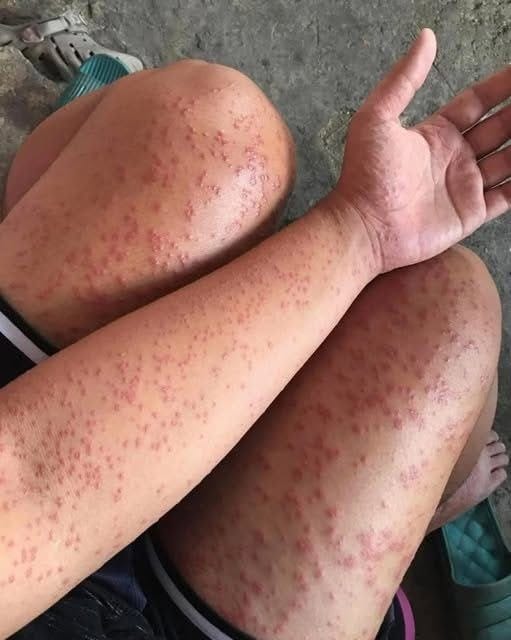
The first bump was small. I blamed it on a stray mosquito or a bit of stress-induced hives. But by night two, the pattern emerged. It wasn’t just a bump; it was a map. A line of red, itchy welts tracing exactly where my skin met the fabric of the mattress. My brain was telling me to relax, but my skin was screaming for me to run.
In 2026, we are obsessed with “listening to our gut,” but we often forget to listen to our largest sensory organ: our skin. Here is what happened when I finally stopped scratching and started investigating the invisible history of a “charming” space.
1. The “Breakfast, Lunch, and Dinner” Pattern
If you wake up with bumps in a straight line or a cluster of three, your skin isn’t just reacting; it’s being fed upon.
=
The Bed Bug Signature: Pest experts call this the “breakfast, lunch, and dinner” pattern. Bed bugs are patient. They hide in the seams of old mattresses, wait for the CO2 from your breath to signal you’re asleep, and then travel along your skin in a line.
The Delayed Reaction: The terrifying part? Some people don’t react for days. Your skin might be sounding the alarm on night three for a bite that happened on night one. If you see “the line,” the “charm” of the apartment is officially over.
2. The Ghost of Previous Tenants (Fleas & Fabric)
Old apartments don’t just hold memories; they hold microscopic survivors.
The Dormant Flea: Fleas can live in floorboards and carpet fibers for months without a host. They enter a state of “suspended animation” until they feel the vibrations of a new warm body—you.
The “Ankle” Warning: If your bumps are concentrated around your ankles and lower legs, your skin is warning you that the floor is the source of the danger. It’s not the bed; it’s the history of a pet you never met.

3. The “Deep Pillow” Truth (Dust Mites & Bio-Accumulation)
We often forget that pillows are like sponges for the human body.
The Weight of History: Studies show that after two years, a significant portion of a pillow’s weight is actually dead skin cells, dust mites, and their droppings.
The Micro-Hives: If your skin is “pulsing” or you’re waking up with a puffy face and red patches on your neck, your skin is reacting to Dermatophagoides—dust mites. You aren’t just sleeping on a pillow; you’re sleeping on decades of someone else’s biological debris.
4. The Invisible Drift (Mold & Chemical Residue)
Sometimes the bumps aren’t bites at all. They are contact dermatitis.
The Chemical Layer: Old apartments have been cleaned with thousands of different chemicals over the years. Lead paint dust, old-school ammonia, and modern detergents can create a “chemical cocktail” trapped in the dust.
The Mold Warning: If the bumps feel more like a dry, scaly rash, your skin might be reacting to mold spores drifting through the old HVAC system or hiding behind the “charming” wallpaper. Your skin is the first thing to detect the toxicity of the air.
5. The “Hottest Setting” Ritual: How to Reclaim Your Skin
When I finally stripped the bed that morning, I didn’t just see dust; I saw a story I didn’t want to be a part of. Here is how you “rinse an apartment off yourself” in 2026:
The Thermal Shock: Wash everything—clothes, pajamas, even your suitcase—at 140°F (60°C). Heat is the only thing that kills the invisible history of bed bugs and mites.
The Q-Tip Test: Take a Q-tip and run it along the deep seams of the mattress. If you see tiny black specks (fecal spotting), the apartment belongs to the bugs now.
The Skin Barrier Reset: After a long, hot shower, use a fragrance-free ceramide cream. Your skin’s barrier has been “breached” by the environment, and you need to seal it back up.
Nana’s Wisdom: “Trust the Itch”
Nana used to say, “Your mind will tell you lies to keep you comfortable, but your skin doesn’t have the imagination to lie.” She believed that if you couldn’t find peace in a bed, it was because the bed didn’t want you there. She was right. Discomfort is not a coincidence; it is information.
Unfamiliar spaces carry invisible histories. When you stay in an old place, you are stepping into a biological ecosystem that has been established for years. Most of the time, it’s harmless. But when your skin starts speaking in clusters, welts, and itches, listen to it.
Your body recognizes a danger long before your brain is willing to admit that the “charming” apartment is actually a health hazard.
Have you ever stayed in a “perfect” hotel or apartment only to have your skin freak out a few hours later? Was it bed bugs, a “ghost” allergy, or just the energy of the room?