
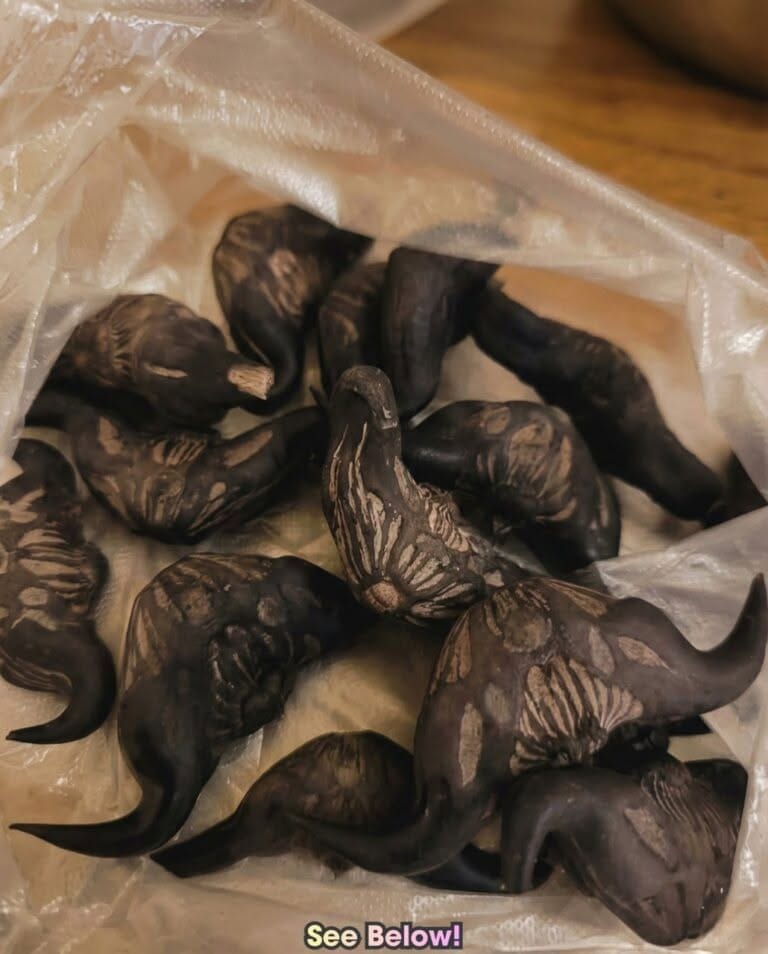
There’s something quietly charming about a neighbor handing you a bag of fresh food with no explanation. No label. No recipe. Just a casual offering, as if to say, “We’ve got more than we need.” Moments like that naturally spark curiosity—especially when what’s inside isn’t immediately familiar. You peer into the bag, turning things over in your hands, wondering what you’ve been given, how people usually eat it, and why there seems to be so much of it.
In 2026, as the world moves toward more localized, “neighbor-to-neighbor” food systems, these “mystery bags” are becoming a beautiful part of suburban and urban life alike. Whether it’s a pile of strange, dark, horned seed pods or a handful of bright, waxy fruits, these gifts represent more than just calories; they represent a bridge between kitchens.
But why the mystery? And what exactly are you supposed to do when you find yourself holding a bag of “botanical enigmas”? Here is the 1,500-word deep dive into the world of shared abundance, the little-known stories of the plants that “over-produce,” and the secrets to identifying your mystery harvest.
1. The “Problem” of Abundance: Why Gardens Explode
More often than not, these gifts come from simple abundance. Home gardens—especially in warmer months—can produce more than one household could ever use. Some plants grow fast and enthusiastically, spreading across beds and climbing trellises as if they’ve doubled overnight.
=
The Fast Growers: Zucchini, cucumbers, okra, green beans, and squash are famous for this. One week there’s barely anything, and the next there’s an armful waiting every morning.
The “Window” of Ripening: Fruits behave the same way. Fig trees, citrus, plums, and tomatoes tend to ripen all at once, creating a narrow window where everything is suddenly ready. Rather than letting good food go to waste, people share it.
Practical Generosity: It’s practical, generous, and deeply rooted in long-standing traditions of community exchange. It’s the ultimate “low-carbon” grocery store.

2. The Case of the “Water Caltrops”: Identifying the Dark and Horned
Sometimes, the bag contains something that looks like it belongs in a fantasy novel rather than a salad. If you find dark, hard, bat-shaped or bull-head-shaped pods in your bag, you have likely been gifted Water Caltrops (or Water Chestnuts).
The Mystery: These pods look like black, wooden bats or horns. To the uninitiated, they can look like “devil pods” or strange carvings.
The Reality: Inside that tough, dark shell is a starchy, white nut that is a staple in many Asian cuisines. They are usually boiled or roasted, and they have a texture similar to a firm potato or a chestnut.
Cultural Significance: In many cultures, these are seasonal delicacies, often associated with specific festivals. Receiving a bag of these is a sign that your neighbor considers you a “foodie” worth sharing a labor-intensive treat with.
3. The “Alien” Magnolia: When Seeds Look Like Jewels
Other times, the gift isn’t even for eating—it’s for the birds or for sheer botanical wonder. If you find a fuzzy, brown cone with bright red “berries” popping out, you’ve found the fruit of a Southern Magnolia.
The Anatomy: The “cone” is actually a collection of follicles, and the red “berries” are seeds covered in a fleshy, oily coating.
The “Alien” Look: These are often mistaken for “alien grenades” or strange fungi.
The Value: While humans don’t eat them, birds absolutely love them. If a neighbor gives you these, they might be suggesting you put them on a bird feeder to attract local cardinals and jays.
4. The Herb Overload: Too Much of a Good Thing
Sometimes the bag is filled with herbs. Mint, basil, dill, oregano, and rosemary can grow with surprising intensity once established.
The Growth Cycle: A single plant can overwhelm a kitchen if harvested all at once, so sharing becomes the easiest solution.
The Value: Fresh herbs are too valuable to discard, yet too potent to consume alone in large quantities.
The Gift of Flavor: A bag of rosemary or mint is an invitation to experiment with oils, teas, or infusions. It’s the neighborly way of saying, “I want your kitchen to smell as good as mine.”
5. Nana’s Wisdom: “Don’t Look a Gift Pod in the Mouth”
Nana never saw a “weird” vegetable she wouldn’t cook. She believed that the best food in the world didn’t come from a store—it came from the fence line.
She used to tell us, “If a neighbor hands you a bag of something you don’t know, they’re giving you a secret. You don’t ask what it is right away; you take it home, you look at it, and you learn its name.” She believed that food was the ultimate language of peace.
She’d say, “People who grow things have more heart than they have space. They don’t want a ‘thank you’ card; they want to know if you enjoyed the soup you made with it.” Nana had a rule: The “Empty Bag” Protocol. She’d say, “Never return a neighbor’s bag empty. If they gave you caltrops, you give them back a jar of jam or a batch of cookies. That’s how a neighborhood stays a community.” Nana knew that the mystery was half the fun. She’d say, “If you only eat what you recognize, you’re living a very small life.”
The Takeaway: Embracing the Culinary Unknown
In 2026, as we seek out more authentic, “real” experiences, the neighborly food exchange is a treasure. Whether it’s the starchy secret of a water caltrop or the “alien” beauty of a magnolia cone, these items are invitations into another world.
So, the next time a bag appears on your porch, don’t be perplexed. Be curious. Wash it, touch it, look it up, and—most importantly—share the story.
What’s the “weirdest” thing a neighbor has ever handed you over the fence? Did you figure out how to cook it, or did it end up as a conversation piece on your counter?