
The opening of Tony Scott’s 1983 film The Hunger remains one of the most stylish and unsettling introductions in modern vampire cinema. Through smoke, shadows, and cold nightclub light, David Bowie and Catherine Deneuve appear as John and Miriam Blaylock, a mysterious couple moving through a world of elegance and danger. Onstage, Bauhaus performs “Bela Lugosi’s Dead,” with Peter Murphy’s voice cutting through the darkness like a warning.

Source: IFC Center
That opening sequence helped define the film’s identity. It was not the bright, commercial version of the 1980s often remembered through neon colors and glossy pop culture. Instead, The Hunger created a cooler, darker world — one of underground glamour, European poise, and emotional distance. It gave the decade a different heartbeat: elegant, nocturnal, and rebellious.
At the center of that atmosphere was David Bowie, who in 1983 was living through one of the most contradictory years of his career. On one side, he was becoming a massive global pop star with Let’s Dance. On the other, he was on a film set surrendering his familiar image to play a doomed, aging vampire. For the role, Bowie performed with restraint, beauty, and unease, allowing his celebrity image to be slowly stripped away.

Source: Wikimedia Commons

His transformation in The Hunger was not only emotional. It was physical. The film used aging makeup and prosthetics to show John Blaylock’s rapid decline, turning Bowie’s famously sharp, otherworldly beauty into something fragile and haunted. That contrast gave the role much of its power. Bowie was not simply playing a vampire; he was playing the terror of losing youth, control, and identity.
Into this carefully designed world came Susan Sarandon as Dr. Sarah Roberts, a scientist studying sleep and aging. Her character could have easily become a simple outsider pulled into gothic fantasy, but Sarandon gave Sarah intelligence, curiosity, and emotional force. She grounded the film, making its surreal world feel more human and more dangerous.

Source: Wikimedia Commons

Sarandon and Bowie developed a romantic relationship during the period surrounding The Hunger. Years later, Sarandon spoke of him with admiration, calling him extraordinary and describing that chapter as a fascinating time in her life. Her comments did not sound like simple celebrity nostalgia. They suggested the respect of one fearless artist recognizing another.
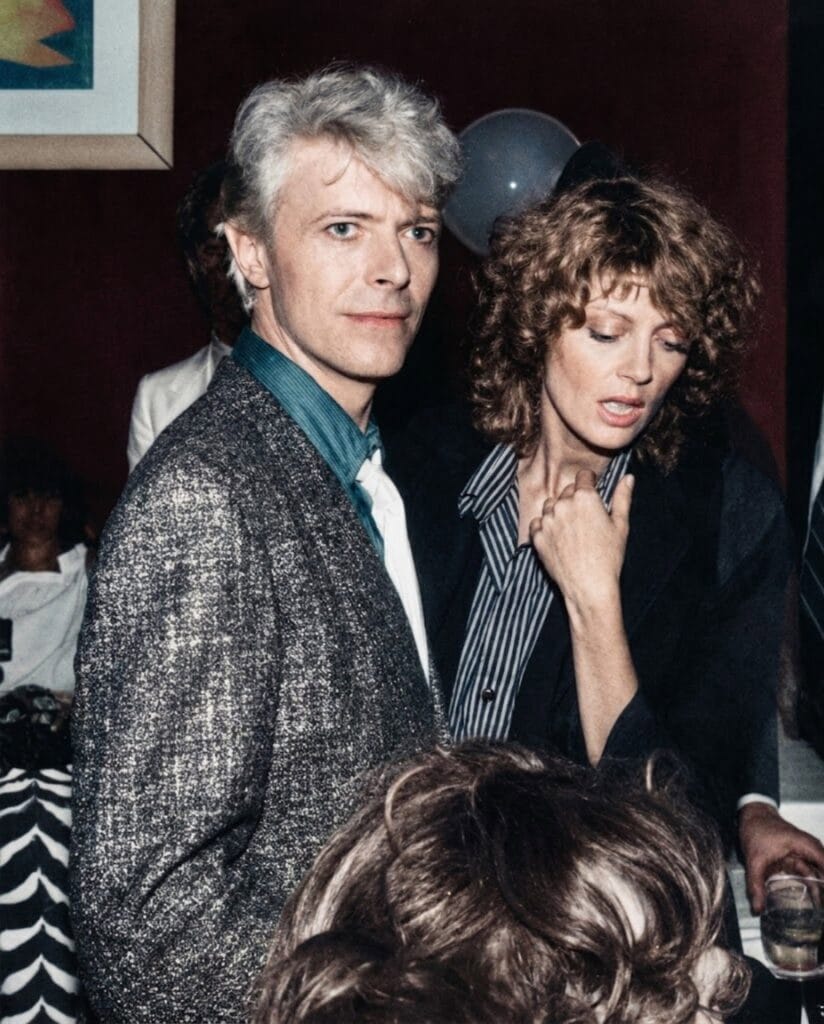
The rare black-and-white image of Sarandon and Bowie from around 1983, often associated with the Cannes Film Festival period, captures that unusual chemistry. They look relaxed but magnetic, stylish without appearing forced. It is not the image of a loud Hollywood couple chasing attention. It feels quieter than that — two sharp, curious people sharing the same strange creative orbit.
The power of their connection was partly intellectual. Bowie was never only a singer, and Sarandon was never only a screen performer. Both were drawn to risk. Both resisted easy categorization. In The Hunger, that shared instinct found the perfect setting: a film about desire, decay, immortality, and the danger of wanting life to stay beautiful forever.
The movie itself was not a conventional hit when it first appeared. Its atmosphere was stronger than its plot, and its style sometimes overwhelmed the story. Yet that is also why it endured. Over time, The Hunger became a cult object, especially within gothic and alternative culture. Its images — the nightclub, the smoke, the sunglasses, the music, the pale luxury — continued to echo long after 1983.
For Bowie, the film became part of a larger year of reinvention. While Let’s Dance brought him stadium-sized success, The Hunger showed a colder and more fragile side of him. He could be glamorous, but he could also be unsettling. He could be a pop icon, but he could still disappear into a strange, difficult role.

Source: Wikimedia Commons

For Sarandon, the film added another bold chapter to a career that would later include some of the most memorable performances in American cinema. She continued to build a reputation for intelligence, independence, and emotional honesty on screen. Decades later, she remains active in public life and entertainment, still recognized as a performer who never relied on easy choices.

Source: Wikimedia Commons

Their romantic chapter eventually ended, but the cultural imprint of their 1983 intersection never fully disappeared. Sarandon and Bowie represented a kind of celebrity that felt more mysterious than manufactured. They did not need constant headlines to feel powerful. Their presence came from intelligence, style, and the sense that they were always slightly ahead of the room.
Today, that rare image of Susan Sarandon and David Bowie still fascinates people because it captures more than two famous faces. It captures a moment when film, music, fashion, and underground culture briefly merged into something unforgettable. The Hunger may have been a vampire film, but its real afterlife belongs to the atmosphere it created — and to the two artists whose quiet chemistry still haunts the frame.